


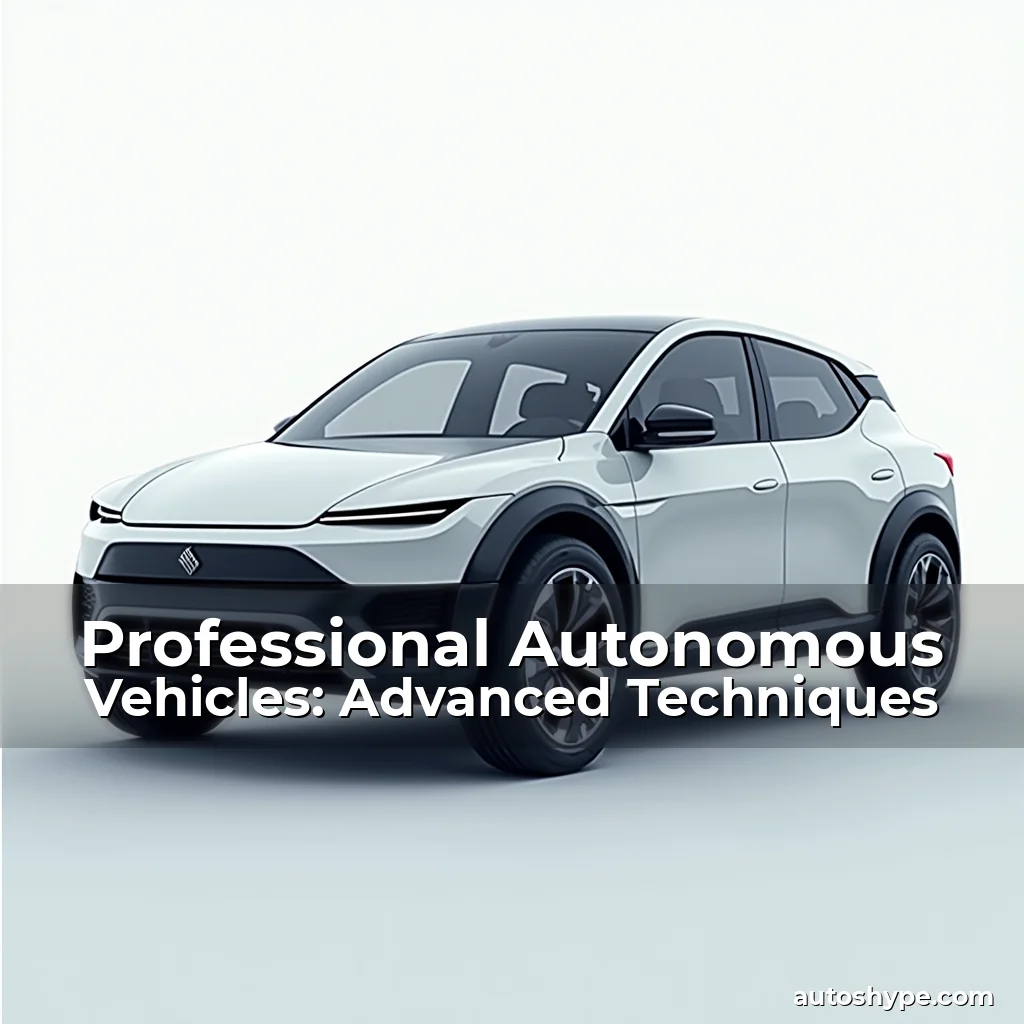
The Engineering Marvel Behind Autonomous Driving
Autonomous vehicles rely on a complex interplay of hardware and software to navigate safely and efficiently. At the core of this system lies a network of sensors, cameras, and processors working in unison to interpret the environment.
Advanced lidar systems create high-resolution 3D maps of surroundings, while radar detects objects even in adverse weather conditions. Cameras capture visual cues, enabling the vehicle to recognize traffic signs, pedestrians, and lane markings with remarkable precision.
- Sensors: Lidar, radar, ultrasonic sensors, and cameras form the sensory nervous system of autonomous vehicles.
- Data Fusion: Combining inputs from multiple sources enhances situational awareness and reduces errors in decision-making.
- Redundancy: Critical systems often feature backup mechanisms to ensure reliability during emergencies.
The computational power required to process vast amounts of real-time data is staggering. High-performance GPUs and specialized chips handle tasks ranging from object recognition to path prediction, mimicking human cognitive functions with machine efficiency.
Vehicles equipped with Level 4 autonomy can operate without human intervention in predefined environments, though they still require oversight in unpredictable scenarios. This balance between automation and human control remains a focal point for engineers worldwide.
Current State of Autonomous Vehicle Development
Tesla’s Full Self-Driving (FSD) suite represents one of the most aggressive pushes toward widespread adoption. By leveraging over-the-air updates and extensive road testing, Tesla continues refining its neural networks to improve navigation capabilities.
Waymo, Google’s self-driving division, has deployed thousands of autonomous taxis across Phoenix, Arizona. Their fleet operates without human supervisors, showcasing the feasibility of fully automated ride-hailing services in controlled environments.
Traditional automakers like General Motors and Ford are investing heavily in partnerships with tech firms to accelerate progress. GM’s Cruise subsidiary leads in deploying robotaxis, while Ford collaborates with Argo AI to develop scalable solutions.
Beyond passenger vehicles, autonomous trucks are making headlines. Companies like TuSimple and Embark are piloting long-haul freight operations, aiming to reduce costs and enhance safety in commercial transport.
Global Adoption Trends
In China, Baidu’s Apollo platform has partnered with local manufacturers to test autonomous rideshares in cities like Beijing and Shanghai. Government support and infrastructure investments are fueling rapid experimentation in the region.
Europe maintains stringent regulations but sees growing interest from startups and established players alike. Germany’s Volkswagen Group is advancing its ID. Buzz electric van as a potential base for autonomous delivery services.
The Middle East is emerging as a hub for autonomous vehicle testing due to favorable climate conditions and government-backed initiatives aimed at boosting smart city projects.
Despite global momentum, regional differences persist. North America emphasizes private-sector leadership, whereas Asian markets benefit from strong public-private collaboration frameworks.
Safety Innovations in Autonomous Systems
Autonomous vehicles prioritize safety through predictive algorithms capable of anticipating hazards before they occur. Machine learning models analyze millions of miles worth of driving data to identify patterns and optimize responses.
Critics argue that removing human judgment introduces new risks. However, proponents counter that computers make fewer mistakes than humans, particularly in repetitive or monotonous driving situations.
Emergency response protocols are designed to handle worst-case scenarios. If a vehicle encounters an unavoidable collision, advanced braking systems aim to minimize damage severity compared to traditional reaction times.
Crash avoidance systems integrate with vehicle-to-everything (V2X) communication networks, allowing cars to receive warnings about sudden stops ahead or construction zones up to several hundred meters away.
Collision Avoidance Technologies
Adaptive cruise control adjusts speed automatically to maintain safe distances from other vehicles. When combined with lane departure warning systems, it significantly reduces rear-end collisions.
Lane-keeping assist uses steering adjustments to prevent unintentional drift out of lanes—a critical feature for drowsy or distracted drivers.
Pedestrian detection systems employ thermal imaging alongside visible light cameras to identify individuals in low-light conditions or inclement weather.
These technologies work synergistically, forming layers of protection that collectively enhance overall road safety metrics across diverse driving conditions.
Legal and Ethical Challenges Ahead
The regulatory landscape for autonomous vehicles varies dramatically by jurisdiction. Some states grant exemptions for testing purposes, while others impose strict limitations until clear guidelines emerge.
Determining liability in accidents involving self-driving cars presents unique challenges. Traditional insurance frameworks struggle to assign responsibility when both manufacturer and software developer may share fault.
Privacy concerns arise from continuous data collection practices inherent to autonomous systems. Location tracking and behavioral analysis raise questions about consumer consent and data security.
Governments face pressure to establish uniform standards governing cybersecurity measures, ensuring that hacking attempts cannot compromise vehicle functionality or personal information.
Ethical Dilemmas in Programming Decisions
Programmers must decide how autonomous vehicles should respond in moral dilemmas—an unavoidable ethical quandary known as the trolley problem applied to vehicular contexts.
Some researchers advocate for transparent decision-making processes that allow users to customize risk tolerance settings according to individual preferences.
Public trust hinges on demonstrable improvements in accident reduction rates relative to conventional vehicles. Demonstrating consistent performance across varied geographic locations strengthens credibility.
Transparency initiatives, including open-source sharing of algorithmic logic, help demystify complex decisions made milliseconds before critical events unfold.
Consumer Acceptance and Market Readiness
While early adopters embrace autonomous features, broader acceptance depends on addressing lingering skepticism among mainstream consumers. Surveys indicate that many remain unconvinced about relinquishing full control over their vehicles.
Cost remains a barrier despite decreasing component prices. Even partial automation packages add significant expenses that deter budget-conscious buyers seeking value-for-money options.
Riding services offer promising avenues for exposure. Users experiencing autonomous shuttles or robotaxis firsthand may gradually build confidence in the technology’s reliability.
Education campaigns emphasizing safety benefits and ease-of-use stand to bridge perception gaps between technological capability and consumer expectations.
User Experience Design Considerations
Interior design must evolve to accommodate changing roles aboard autonomous vehicles. Comfort-focused seating arrangements and entertainment systems cater to relaxed travel experiences rather than focused driving duties.
Interfaces should simplify interaction with automated systems, minimizing distractions that could undermine perceived safety advantages. Voice commands and intuitive touchscreens facilitate seamless engagement.
Customization options allow users to adjust comfort settings, route preferences, or environmental controls based on personal inclinations during journeys.
Feedback loops gather usage data anonymously, helping developers refine products continuously through iterative improvements aligned with actual customer behavior patterns.
Fuel Efficiency Gains Through Automation
Autonomous vehicles optimize routes dynamically, reducing unnecessary detours and idling periods that waste energy. Predictive routing software anticipates congestion patterns far better than manual navigation apps.
Smooth acceleration profiles contribute substantially to improved fuel economy. Unlike abrupt starts and stops typical of human-driven cars, automated systems maintain optimal throttle positions consistently.
Electric autonomous vehicles benefit doubly from reduced mechanical wear since regenerative braking becomes more effective with precise deceleration timing managed by onboard computers.
Hybrid models leverage these efficiencies further, extending range between refueling intervals and enhancing overall cost-effectiveness for environmentally conscious motorists.
Environmental Impact Assessments
Studies show that widespread deployment of autonomous electric vehicles could cut carbon emissions by nearly 60% globally, assuming mass conversion from internal combustion engines occurs simultaneously.
Urban planners envision integrated transport ecosystems where autonomous shuttles complement existing public transit networks, reducing reliance on private ownership altogether.
Shared mobility platforms utilizing autonomous fleets promise higher utilization rates compared to individually owned cars, maximizing resource efficiency across entire metropolitan areas.
Government incentives targeting zero-emission autonomous vehicles align with international climate goals, creating policy tailwinds for sustainable transportation innovations.
Future Prospects and Emerging Technologies
Quantum computing holds transformative potential for autonomous vehicles by solving complex optimization problems exponentially faster than classical supercomputers currently available.
Neural interface technologies may eventually enable direct brain-computer interactions, potentially replacing physical controls entirely through thought-based command execution.
Holographic displays project augmented reality interfaces onto windshields, overlaying digital information seamlessly onto real-world views for enhanced situational awareness.
Nanotechnology advances promise lighter materials that improve structural integrity without sacrificing crashworthiness—a crucial factor in next-generation vehicle designs.
Infrastructure Upgrades Needed
Smart highways equipped with embedded sensors and V2X communication nodes become essential enablers for fully realized autonomous networks operating at scale.
Standardized charging stations spaced strategically along major corridors ensure uninterrupted operation for electric autonomous fleets engaged in long-distance haulage missions.
Regulatory harmonization facilitates cross-border operations, preventing fragmentation issues that would otherwise hinder international trade via autonomous cargo transport.
Investment in resilient 5G/6G networks guarantees ultra-low latency connections necessary for real-time coordination between interconnected autonomous units.
Conclusion
The journey toward fully autonomous transportation involves navigating technical complexities, societal adaptations, and evolving regulatory landscapes simultaneously. As we witness unprecedented innovation in this space, understanding underlying principles empowers informed participation in shaping tomorrow’s mobility ecosystem.
Whether through supporting research efforts, advocating for responsible legislation, or simply embracing incremental enhancements in semi-autonomous features now available, every stakeholder plays a role in accelerating this revolution responsibly and sustainably.


news is a contributor at AutosHype. We are committed to providing well-researched, accurate, and valuable content to our readers.
You May Also Like

Autonomous Vehicles Best Practices 2025
The Future is Now: Navigating Autonomous Vehicle Technology in 2025 In an era where innovation drives every aspect of our...

Autonomous Vehicles Step-by-Step Tutorial
Navigating the Future: A Deep Dive into Autonomous Vehicle Technology The world of transportation is undergoing a seismic shift with...

WiTricity Shifts Focus, Relocates Headquarters to Georgia
The electric vehicle charging startup, WiTricity, has made significant changes in its operations, including relocating its headquarters from Massachusetts to...

Autonomous Maserati Shatters Speed Record: A Technological Marvel!
The challenge was designed to test the capabilities of autonomous vehicles in a real-world setting. The IAC is a competition...