



The Future Drives In: Exploring the World of Concept Vehicles
In an era where innovation fuels every corner of our lives, concept vehicles stand as the vanguard of automotive evolution. These are not mere prototypes; they represent bold visions that challenge conventional design and engineering paradigms.
For automotive enthusiasts and discerning car owners alike, concept cars offer a glimpse into what tomorrow’s transportation might look like. From electric powertrains to autonomous driving features, these vehicles encapsulate the future of mobility.
Pioneering Design Language
One of the most captivating aspects of concept vehicles is their audacious exterior styling. Automakers use these platforms to test radical shapes and materials that often defy traditional aesthetics.
Designers push boundaries by integrating aerodynamic curves with futuristic elements such as gull-wing doors or LED lighting systems embedded within body panels. These innovations may eventually trickle down to production models.
Materials play a crucial role in concept vehicle development. Lightweight composites, carbon fiber reinforced polymers, and even experimental alloys allow engineers to create structures that balance performance with visual impact.
While some design cues remain purely speculative, others evolve into practical solutions used in mass-produced cars. The Audi e-tron GT exemplifies how a concept can influence mainstream design language years later.
- Aerodynamic efficiency: Streamlined forms reduce drag, improving fuel economy and speed capabilities.
- Lightweight construction: Advanced materials contribute to better handling and reduced energy consumption.
- Integrated technology: Seamless integration of digital interfaces enhances both functionality and user experience.
Revolutionary Powertrain Innovations
Powertrain advancements form the backbone of modern concept vehicles. Manufacturers experiment with hybrid systems, hydrogen fuel cells, and fully electric drivetrains to redefine vehicle performance standards.
Battery technology remains at the forefront of EV concept developments. Solid-state batteries promise higher energy density while eliminating safety concerns associated with liquid electrolytes.
Fuel cell technology presents another compelling avenue. Companies like Toyota have demonstrated hydrogen-powered concepts capable of refueling in minutes rather than hours.
Hybrid configurations continue to evolve beyond simple gasoline-electric combinations. Plug-in hybrids and range-extender designs showcase diverse approaches to achieving optimal efficiency.
Autonomous Driving Capabilities
Self-driving technology has become a defining feature of many contemporary concept vehicles. These prototypes explore varying levels of autonomy from semi-autonomous assistance to full self-driving capabilities.
Sensors, cameras, and AI processors work in harmony to enable real-time decision-making. Lidar systems provide precise spatial awareness essential for safe navigation through complex environments.
Vehicles equipped with Level 4 automation can operate independently under predefined conditions without human intervention. This level represents significant progress toward true driverless operation.
Despite technological advances, regulatory frameworks still pose challenges for widespread adoption of autonomous vehicles. Legal definitions surrounding liability and responsibility require careful consideration.
Evolving Safety Standards
Safety regulations continually adapt to incorporate new technologies found in concept vehicles. Crash-test protocols now account for advanced driver-assistance systems that prevent accidents before they occur.
New metrics evaluate how well automated systems respond to unexpected scenarios during testing phases. These assessments ensure that safety doesn’t compromise on the pursuit of innovation.
Regulatory bodies worldwide collaborate closely with automakers to establish standardized benchmarks. Harmonizing global requirements facilitates smoother market entry for innovative concepts.
This evolving landscape creates opportunities for manufacturers to demonstrate cutting-edge safety measures while navigating compliance processes effectively.
Interior Innovation and User Experience
Concept vehicles revolutionize interior spaces by reimagining ergonomics and connectivity options. Interior layouts prioritize comfort while incorporating state-of-the-art infotainment systems.
Multimedia displays replace traditional instrument clusters in many futuristic designs. Touchscreens integrated with haptic feedback enhance interaction between drivers and vehicle controls.
Adaptive seating arrangements cater to different occupant needs. Some concepts feature modular interiors allowing flexible configuration based on usage scenarios.
User interface design focuses heavily on intuitive navigation. Voice recognition software enables hands-free control over various vehicle functions.
Sustainable Mobility Solutions
Environmental consciousness drives much of today’s concept vehicle development. Manufacturers strive to minimize ecological footprints through sustainable manufacturing practices and eco-friendly materials.
Recyclability becomes increasingly important in component selection. Modular design principles facilitate easier disassembly and reuse of parts at end-of-life stages.
Electric propulsion reduces greenhouse gas emissions significantly compared to internal combustion engines. Many concept vehicles emphasize zero-emission operations as standard practice.
Some companies explore biodegradable plastics and natural fibers for interior components. These alternatives maintain quality while reducing long-term environmental impacts.
Connectivity and Smart Features
Modern concept vehicles integrate smart technologies seamlessly into daily driving experiences. Connectivity extends beyond basic smartphone integration to encompass vehicular networks and cloud-based services.
Vehicular communication systems enable platooning – coordinated movement of connected vehicles enhancing traffic flow efficiency. This technology promises to transform urban mobility patterns.
Over-the-air updates allow continuous improvement of vehicle software post-purchase. This capability ensures that concept-inspired features stay relevant through ongoing enhancements.
Vehicle-to-everything (V2X) communication opens up possibilities for enhanced situational awareness. Real-time data sharing improves road safety and optimizes route planning dynamically.
Road Testing and Development Cycles
Development timelines for concept vehicles vary greatly depending on intended purpose and complexity involved. Some projects take months while others span several years of rigorous research and refinement.
Prototypes undergo extensive validation through simulated environments before real-world testing commences. Virtual reality tools help assess feasibility early in development cycles.
Field trials involve gathering empirical data regarding performance characteristics under varied conditions. Feedback loops refine initial designs progressively until meeting desired specifications.
Iterative improvements drive innovation forward continuously. Each iteration builds upon previous knowledge leading towards more refined final products.
Cultural Impact and Public Perception
Concept vehicles serve dual purposes – showcasing technical prowess while also influencing public perception about future mobility trends. They act as cultural artifacts reflecting societal values related to transport preferences.
Media coverage amplifies visibility around groundbreaking unveilings creating anticipation among consumers. Social media engagement helps gauge interest levels across demographics.
Public exhibitions generate excitement through immersive experiences allowing attendees to interact physically with next-generation technologies firsthand.
Consumer reactions shape subsequent product strategies by highlighting which features resonate strongly versus those perceived as impractical or unnecessary.
The Road Ahead: What’s Next?
Ongoing research explores emerging fields such as quantum computing applications in vehicle control systems or bio-integrated materials responding organically to external stimuli.
Advancements in artificial intelligence will likely lead to smarter adaptive cruise control systems that anticipate traffic patterns more accurately than ever before.
Energy storage breakthroughs could result in ultra-fast charging infrastructure enabling seamless travel between destinations without lengthy wait times.
Collaboration between industries accelerates cross-disciplinary innovations that blur lines between mechanical engineering and information technology domains.
Conclusion
Concept vehicles embody humanity’s relentless quest for progress within the realm of personal transportation. Their existence pushes boundaries technically while inspiring imaginations globally.
By observing current developments closely, we gain insight into potential transformations awaiting our roads in coming decades. Embracing change thoughtfully allows us to appreciate how these visionary creations gradually become part of everyday life.


news is a contributor at AutosHype. We are committed to providing well-researched, accurate, and valuable content to our readers.
You May Also Like


Best Concept Vehicles Tips and Strategies
The Future in Motion: Exploring the World of Concept Vehicles In an era where innovation meets imagination, concept vehicles stand...

Professional Concept Vehicles: Advanced Techniques
Revolutionizing Tomorrow’s Roads: A Deep Dive Into the World of Concept Vehicles In the ever-evolving landscape of automotive engineering, concept...

Concept Vehicles for Beginners: Getting Started
The Future in Your Garage: A Deep Dive Into Concept Vehicle Innovation When you think of concept cars, what comes...
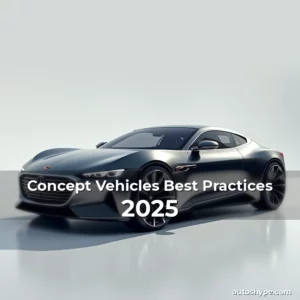
Concept Vehicles Best Practices 2025
Revolutionizing Mobility: A Deep Dive Into Concept Vehicle Innovations for 2025 In an era where automotive technology is evolving at...