


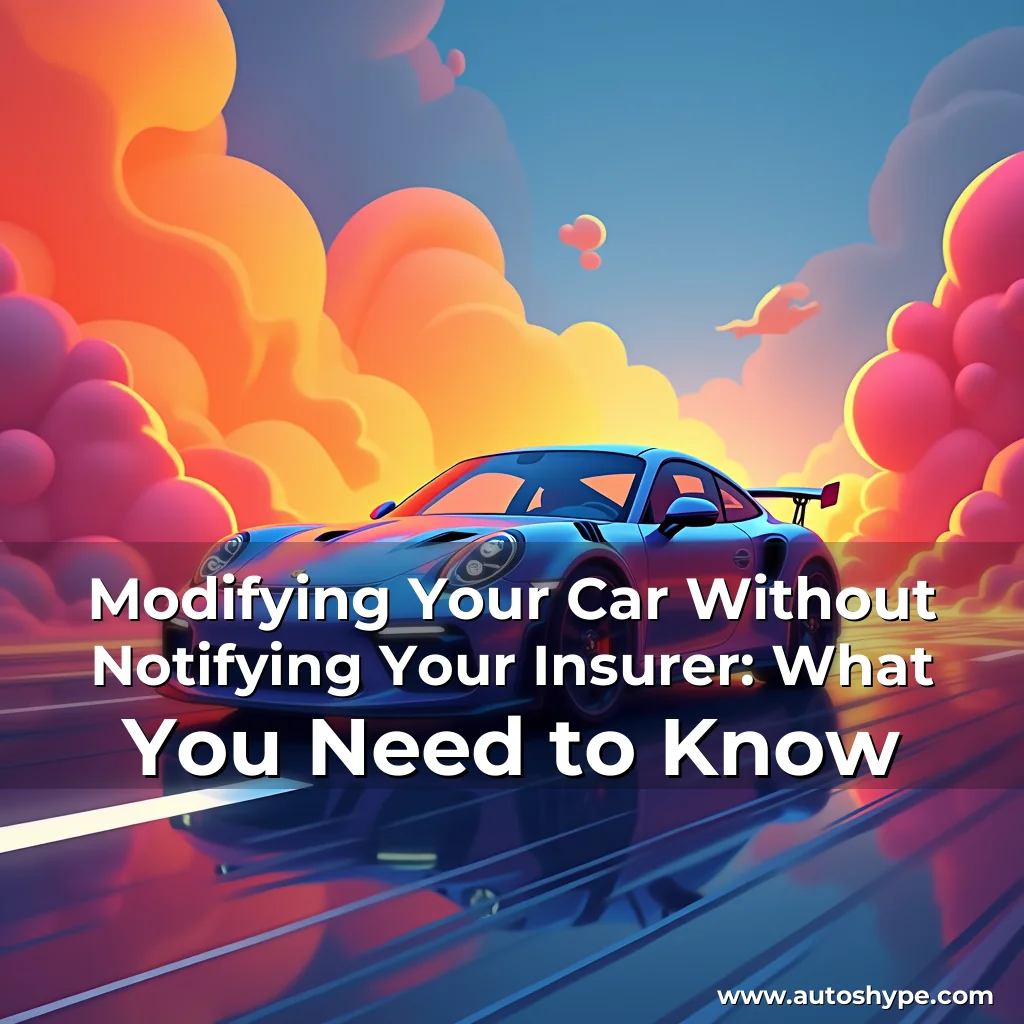
Modifying your car can be a great way to personalize your vehicle and make it more practical for your needs. However, when it comes to car insurance, there are certain modifications that could void your policy if not declared. In this article, we will explore the different types of car modifications that could invalidate your insurance and provide you with the information you need to stay protected.
What are the most common car modifications that could invalidate your insurance?
•
- Roof boxes
- Bicycle carriers
- Window tints
- Tow bars
- Sunroofs
•
•
•
•
•
These modifications can increase the risk of an accident or damage to your vehicle. However, it’s essential to note that not all modifications will void your insurance policy. For example, window tints that are legal and declared to your insurer will not automatically invalidate your policy.
Roof Boxes: A Modification That Could Void Your Insurance
A roof box is a modification that can be installed on a car to provide additional storage space. However, it can also increase the risk of an accident or damage to your vehicle. Poorly secured or overloaded roof racks can be dangerous, and the added weight can impact the vehicle’s handling. •
- Roof racks are not standard equipment
- Roof racks can impact the vehicle’s weight distribution
- Poorly secured or overloaded roof racks can be dangerous
•
•
•
If you install a roof box or roof rack without declaring it to your insurer, you could invalidate your insurance policy. It’s essential to inform your insurer about any modifications you make to your car, as they can affect the risk of an accident or damage.
Window Tints: A Modification That Could Void Your Insurance
Window tints can be a popular modification for car owners, but it’s essential to note that they can also void your insurance policy if not declared. However, if you have a legal window tint and declare it to your insurer, you are unlikely to face any issues. •
- Window tints do not automatically invalidate your insurance
- However, premiums are unlikely to go up with this modification
- You must declare window tints to your insurer
•
•
•
It’s crucial to check your policy covers the item you’re modifying to ensure you’re not putting yourself at risk.
Tow Bars: A Modification That Could Void Your Insurance
Towing another item, whether it’s a caravan, trailer, or other items, increases the risk of an accident happening. Therefore, adding a tow bar without declaring it to your insurer could be an issue. It’s essential to check your policy covers the item you’re towing too. •
- Towing increases the risk of an accident
- You must declare tow bars to your insurer
- Check your policy covers the item you’re towing too
•
•
•
Sunroofs: A Modification That Could Void Your Insurance
Adding a sunroof to your car can alter its value, repair costs, and even its structural integrity. Those added after purchase can also be prone to leaks. Therefore, it’s essential to declare any modifications, including sunroofs, to your insurer. •
- Sunroofs can alter the car’s value
- Sunroofs can impact repair costs
- Sunroofs can affect the car’s structural integrity
•
•
•
Conclusion
Modifying your car can be a great way to personalize your vehicle, but it’s essential to declare any modifications to your insurer to avoid voiding your policy. By understanding the different types of car modifications that could invalidate your insurance, you can take steps to protect yourself and your vehicle.
“As the weather improves and motorists head off for summer trips, many make seasonal modifications, like adding a roof box or towbar, but failing to inform the insurer of these changes could invalidate the insurance and leave the driver unprotected.” – Greg Wilson, CEO and car insurance expert at Quotezone.co.uk


Key Takeaway: Modifying your car without declaring it to your insurer can void your policy. Make sure to inform your insurer about any modifications you make to your car to avoid any issues.
•
A modification is a change made to a vehicle that can affect its performance, safety, or value. •
An insurance policy is a contract between an insurer and a policyholder that provides financial protection against losses or damages.


news is a contributor at AutosHype. We are committed to providing well-researched, accurate, and valuable content to our readers.
You May Also Like

Common Car Modifications Mistakes to Avoid
Common Car Modifications Mistakes to Avoid In the world of car modifications, enthusiasm often outpaces caution, leading many drivers down...

This Ugly 1985 Casper Cop Car Was Deceptively Fast And Still Fast Today!
*Note: The link is not included here as it is not possible to access external links in this format.• The...
Car Modifications for Small Spaces
Elevating Performance & Style: A Deep Dive into Car Modifications In the world of automotive passion, car modifications stand out...
A 5,000 km Odyssey: My Car's Transformation
I recently completed 5,000 km with my car modifications, and I must say, the vehicle has become quite good to...