


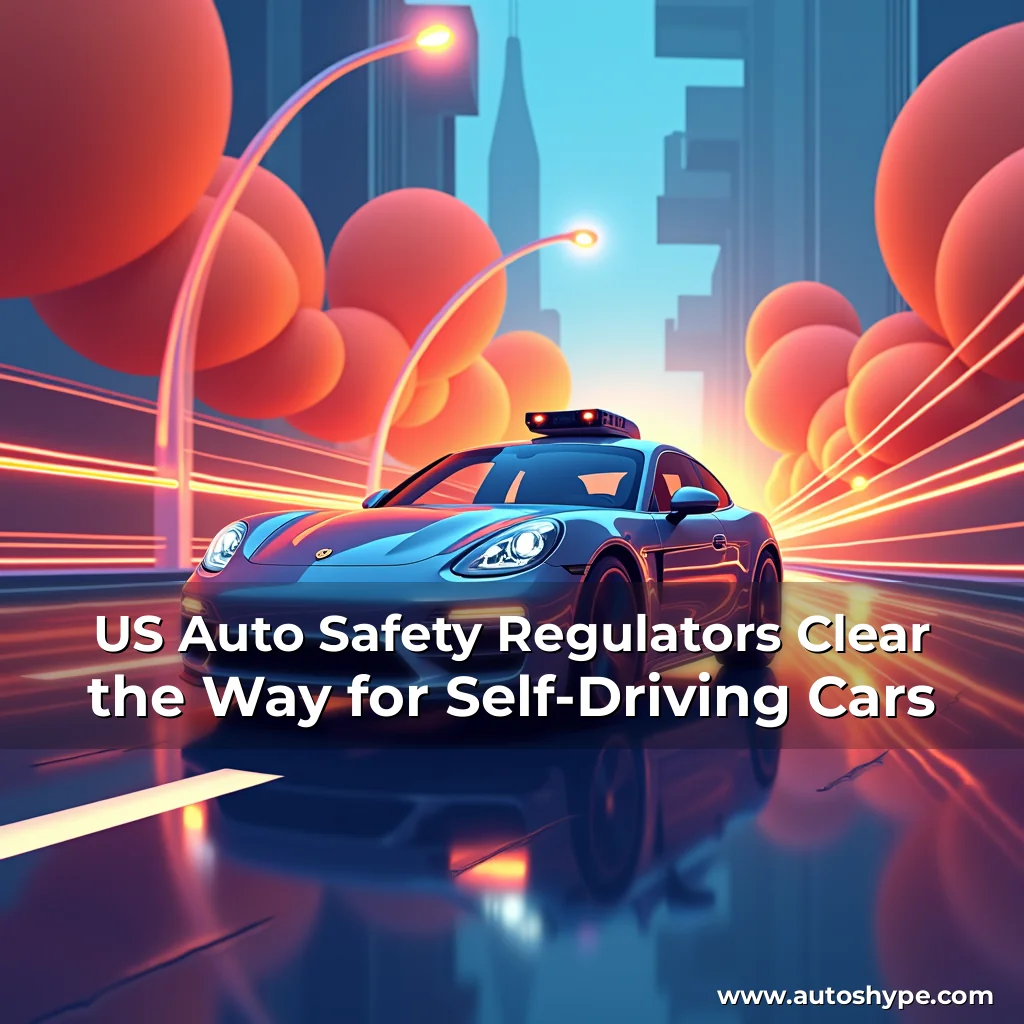
The Trump administration has given the green light to Zoox, a subsidiary of Amazon.com Inc., to test self-driving cars that don’t have traditional driving controls like steering wheels and brake pedals.
Key Points
- US auto safety regulators have granted an exemption to federal vehicle safety standards for self-driving cars made by Zoox.
- These vehicles are purpose-built without steering wheels or brake pedals and have been allowed to operate on public roads.
- Amazon-owned Zoox has been testing its driverless car, which has four inward-facing seats, since 2022.
- The exemption is a boost for Zoox, which plans to produce 10,000 robotaxis a year.
According to the National Highway Traffic Safety Administration (NHTSA), all the self-driving vehicles made by Zoox operating on public roads are doing so under the new exemption. However, it is unclear how many of those cars are in operation.
Why is this exemption significant?
US auto safety standards typically require vehicles to have human controls. This has created regulatory headaches for companies like Zoox, General Motors Co. and Tesla Inc. that have designed self-driving cars without those features.
However, NHTSA has taken steps this year to remove barriers for self-driving cars, including granting Zoox an exemption under a policy updated earlier this year. This exemption allows domestically produced autonomous vehicles to qualify for exemptions previously offered only to imports.
Additionally, the agency has said it will update a separate exemption authority to speed the review process for self-driving car exemptions, a move intended to boost deployment.
What does this mean for Zoox and the future of self-driving cars?
The exemption is a significant boost for Zoox, which plans to use it to produce 10,000 robotaxis a year. The company’s robotaxi is akin to a shuttle and has no steering wheel or pedals, with four inward-facing seats.
With this exemption, Zoox can now demonstrate its self-driving car technology without the need for traditional driving controls. This allows the company to continue testing and refining its technology, which is a critical step towards widespread adoption of self-driving cars.
Regulatory Challenges
| Challenges | Examples |
|---|---|
| Regulatory hurdles | Zoox, General Motors Co. and Tesla Inc. have all faced challenges in designing self-driving cars without traditional human controls. |
| NHTSA’s role | NHTSA has a critical role in regulating self-driving cars, but it has also taken steps to remove barriers for these vehicles. |
| Industry-wide adoption | Industry-wide adoption of self-driving cars is crucial for their success, but regulatory challenges remain a significant hurdle. |
Examples of Self-Driving Cars
There are several companies working on self-driving cars, including:
- Waymo, which has been testing self-driving cars in Phoenix, Arizona, since 2009.
- Tesla, which has been testing its Full Self-Driving Capability (FSD) technology since 2019.
- General Motors Co., which has been testing its Super Cruise technology since 2017.
These companies are all working towards developing self-driving cars that can operate on public roads, but regulatory challenges remain a significant hurdle.
What’s Next?
With the exemption granted to Zoox, the company can now focus on scaling up its production of robotaxis. However, regulatory challenges will continue to be a significant hurdle for the industry as a whole.
Industry-wide adoption of self-driving cars is crucial for their success, but regulatory challenges remain a significant hurdle. As the industry continues to evolve, it will be interesting to see how regulators address these challenges and enable the widespread adoption of self-driving cars.
With the exemption granted to Zoox, the company can now demonstrate its self-driving car technology without the need for traditional driving controls.


news is a contributor at AutosHype. We are committed to providing well-researched, accurate, and valuable content to our readers.
You May Also Like

Professional Autonomous Vehicles: Advanced Techniques
The Engineering Marvel Behind Autonomous Driving Autonomous vehicles rely on a complex interplay of hardware and software to navigate safely...
The Apple Car That Wasn't
The World's First Attempt at a Luxury Car, Sort Of. The year was 2013, and the world was abuzz with...
Autonomous Vehicles for Beginners: Getting Started
The Future is Now: Understanding Autonomous Vehicle Technology In an era where innovation drives progress, autonomous vehicles stand at the...
U.S. Department of Transportation Unveils New Framework for Self-Driving Cars
Accelerating Innovation and Reducing Regulations The U.S. Department of Transportation, led by Secretary of Transportation Sean P. Duffy, has unveiled...