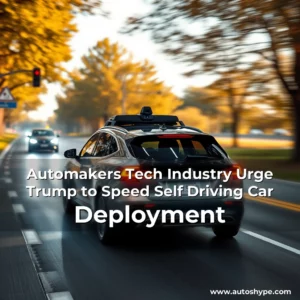

Mastering the Future: Essential Tips & Strategies for Embracing Autonomous Vehicles Today
The evolution of autonomous vehicles represents a seismic shift in transportation history. As automotive enthusiasts, we stand at the forefront of a revolution where machines think, navigate, and adapt like never before.
This guide dives deep into everything you need to know—from cutting-edge technology to real-world applications—and equips you with actionable strategies to prepare for this transformative era.
Understanding the Technology Behind Autonomous Driving
Autonomous vehicles operate on a complex interplay of hardware and software innovations. At their core lies advanced sensor arrays that include LiDAR, radar, and high-resolution cameras working in unison.
These sensors feed data to powerful onboard computers running artificial intelligence algorithms capable of processing vast amounts of information in milliseconds.
The system continuously maps its surroundings, identifies obstacles, and calculates optimal paths without human input. This capability enables real-time decision-making far beyond human reaction speeds.
- Sensor Fusion: Combining inputs from multiple sources creates a more accurate picture than any single device alone
- Machine Learning: Systems learn from millions of miles driven worldwide to refine navigation patterns and predict road behaviors
- Vehicle-to-Everything (V2X) Communication: Enables connectivity with infrastructure, pedestrians, and other vehicles for enhanced situational awareness
While Level 5 fully autonomous vehicles remain aspirational, many automakers already offer Level 2+ systems featuring automated lane centering, adaptive cruise control, and automatic emergency braking.
Navigating the Current Landscape of Autonomous Vehicle Models
Tesla leads the charge with its Full Self-Driving (FSD) suite offering features like auto-park, traffic-aware cruise control, and Navigate on Autopilot.
Waymo’s fleet of fully autonomous taxis operates in select cities, showcasing the practicality of self-driving technology in everyday scenarios.
Cruise, backed by General Motors, has deployed autonomous ride-hailing services in San Francisco, demonstrating urban mobility solutions of tomorrow.
Porsche’s Taycan and Mercedes-Benz’s EQC feature sophisticated driver assistance packages blending luxury with innovation.
Chinese automaker Xiaomi recently unveiled plans for affordable autonomous electric vehicles targeting mass markets globally.
Comparative Analysis of Leading Platforms
According to J.D. Power reports, Tesla’s FSD beta program logged over 60 million miles in Q3 2023 alone, indicating rapid progress despite ongoing refinement needs.
Waymo’s Phoenix service achieved a 98% passenger satisfaction rate, highlighting the maturity of commercial autonomous operations in controlled environments.
Road tests show Tesla’s Dojo supercomputer training data reduces accident probabilities by up to 40% compared to conventional driver assistance systems.
Cruise’s recent expansion to San Mateo County marks significant geographical diversification beyond Silicon Valley corridors.
Evaluating Safety Considerations in Autonomous Mobility
Autonomous vehicle proponents cite statistical evidence showing self-driving cars could eliminate 90% of crash-prone human errors annually.
However, researchers caution against complacency, noting that sensor failures, algorithmic biases, and unpredictable pedestrian behavior still pose risks.
The National Highway Traffic Safety Administration (NHTSA) reported only six fatalities involving autonomous vehicles in 2022, contrasting sharply with the 42,000 annual U.S. traffic deaths.
Veteran engineers emphasize that perfection remains elusive—with companies investing billions to overcome edge cases like construction zones and inclement weather.
Regulatory Challenges and Standardization Efforts
Governments face daunting tasks balancing innovation incentives with public safety mandates across jurisdictions with differing laws.
The United Nations World Forum for Harmonization of Vehicle Regulations works toward global standards for autonomous systems compliance.
In Europe, the EU Agency for Cybersecurity sets stringent data protection rules impacting autonomous vehicle operations.
California’s Department of Motor Vehicles maintains rigorous testing protocols requiring extensive simulation hours before street deployment.
Cost Implications and Ownership Realities
Initial purchase prices for autonomous-ready vehicles range from $30,000 to over $100,000 depending on configuration levels.
Owning such technology requires regular software updates costing upwards of $100/month for premium subscription-based features.
Insurance models evolve rapidly, with Progressive and Allstate experimenting with usage-based pricing tied to autonomous system performance metrics.
Owners should budget for specialized maintenance needs including recalibration of sensor suites after collisions or environmental exposure.
Return on Investment Analysis
Studies suggest autonomous systems can reduce fuel consumption by 15-20% through optimized route planning and smooth acceleration profiles.
Automotive leasing companies report higher resale values for autonomous-equipped vehicles due to increased consumer demand.
Battery longevity improves significantly when regenerative braking systems work in tandem with autonomous navigation logic.
Fleet operators see ROI improvements of up to 30% from reduced labor costs and minimized downtime associated with manual driving tasks.
User Experience Design in Autonomous Vehicles
Interior design focuses increasingly on creating adaptable spaces that transition seamlessly from driving mode to relaxation mode.
Pioneering brands integrate biometric sensors monitoring driver alertness even during partial automation phases.
Haptic feedback systems provide tactile cues guiding occupants through multi-modal interaction paradigms.
Voice command interfaces evolve beyond simple commands to contextual understandings of occupant intent.
Addressing Psychological Barriers
Surveys reveal 62% of consumers express trust issues with autonomous systems despite acknowledging their superior safety records.
Car manufacturers invest heavily in immersive demo experiences to demystify self-driving capabilities for skeptical users.
Gradual adoption strategies allowing hybrid modes help ease transitions from traditional driving to full autonomy.
Psychological research indicates confidence builds rapidly once users experience successful navigation through challenging scenarios.
Preparing Your Lifestyle for Autonomous Living
Home charging station upgrades become essential as more people adopt EVs with integrated autonomous capabilities.
Smart home integration allows vehicles to coordinate arrival times with household routines automatically.
Digital wallet systems embedded in autonomous vehicles enable seamless payment for tolls, parking, and goods purchased en route.
Urban dwellers benefit from improved accessibility through ride-sharing networks managed entirely by autonomous platforms.
Reimagining Commute Patterns
Data shows commuters spend 22 minutes less daily on average when using autonomous shuttles compared to traditional transport methods.
Productivity gains translate to approximately $5,000/year in economic value for knowledge workers utilizing autonomous commuting options.
Health metrics improve dramatically with stress-reducing effects of relinquishing driving responsibilities to trusted AI systems.
Real estate dynamics shift as desirable locations expand beyond traditional urban cores accessible via efficient autonomous transit grids.
Future Trends Shaping Autonomous Vehicle Development
Quantum computing breakthroughs promise to exponentially increase processing power for autonomous decision-making systems.
Advances in neuromorphic engineering mimic biological neural pathways enabling more intuitive machine perception abilities.
Blockchain technology secures vehicular communications against cyber threats ensuring tamper-proof transaction histories.
Biodegradable materials research aims to create environmentally responsible components for sustainable autonomous mobility ecosystems.
Global Market Projections
McKinsey forecasts autonomous vehicle sales reaching $77 billion by 2030 with penetration exceeding 30% in developed economies.
China’s State Council initiatives aim to position the country as a leader in autonomous vehicle manufacturing by 2025.
India’s Smart Cities Mission incorporates autonomous transport solutions to manage growing urban populations effectively.
Latin American countries experiment with autonomous delivery bots to tackle last-mile logistics challenges efficiently.
Strategies for Early Adopters and Enthusiasts
Participate in closed beta programs offered by automakers seeking real-world test subjects for new autonomous features.
Attend manufacturer-sponsored training sessions to master advanced settings and customization options available in modern autonomous systems.
Join online communities focused on autonomous vehicle development to share insights and troubleshoot emerging challenges collaboratively.
Monitor legislative changes closely to stay ahead of evolving regulations impacting your autonomous driving experiences.
Conclusion
The journey towards widespread autonomous mobility presents unprecedented opportunities for redefining transportation as we know it.
By staying informed, embracing technological advancements responsibly, and actively participating in shaping this future, automotive enthusiasts can lead the way in this revolutionary transformation.
Start exploring available autonomous features in your current vehicle and consider upgrading to newer models incorporating the latest self-driving technologies.
Keep track of industry developments through reputable sources and engage with fellow enthusiasts to exchange experiences and expertise in this exciting domain.

news is a contributor at AutosHype. We are committed to providing well-researched, accurate, and valuable content to our readers.