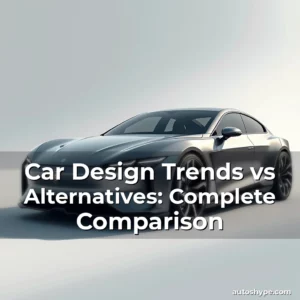

The Evolution of Car Aesthetics: Modern Innovations Shaping Future Designs
In an era where automotive innovation is as much about visual appeal as mechanical performance, car design has become a canvas for technological progress and artistic expression. From sleek aerodynamic curves to bold color palettes that reflect personal identity, today’s vehicles are more than mere transportation—they’re extensions of individual style.
This transformation is driven by advancements in materials science, digital modeling tools, and evolving consumer preferences. As we explore current trends shaping the industry, it becomes clear how these innovations intersect with both function and form to redefine what makes a vehicle truly modern.
Redefining Silhouettes Through Aerodynamics
Aerodynamic efficiency has taken center stage in contemporary car design, with manufacturers prioritizing streamlined shapes to enhance fuel economy and reduce emissions. The pursuit of lower drag coefficients has led to radical changes in traditional body styles.
Vehicles now feature sharper angles and smoother transitions between panels, creating a sense of motion even when stationary. This approach isn’t merely aesthetic—it significantly impacts energy consumption and overall vehicle dynamics.
- Sloping rooflines: Contributing to improved airflow management while enhancing cabin space perception
- Active air intakes: Adjusting based on speed and driving conditions to optimize cooling systems
- Tapered rear ends: Minimizing turbulence and improving high-speed stability
Certain automakers have pioneered this movement through innovative engineering solutions. For instance, some luxury brands incorporate retractable spoilers that deploy at higher speeds without compromising the vehicle’s elegant profile.
These design elements work synergistically with advanced underbody shields and optimized wheel arches, ensuring every contour serves dual purposes—visual impact and functional benefit.
The Rise of Electric Vehicle Aesthetics
As electric vehicles (EVs) gain mainstream acceptance, their distinct design language is reshaping expectations across the entire automotive spectrum. Unlike conventional combustion engines, EV architecture allows for unprecedented freedom in styling choices.
Without the need for bulky engine compartments, designers can create low-slung profiles with expansive battery packs integrated seamlessly beneath the floorpan. This results in wider track widths and lower centers of gravity, fundamentally altering vehicle proportions.
Moreover, the absence of tailpipes and exhaust systems opens up new possibilities for rear-end designs. Manufacturers often utilize this opportunity to emphasize brand identities through signature lighting features and sculptural elements.
Some leading EV models showcase minimalist front grilles or entirely flat facades, reflecting the shift towards clean lines and reduced ornamentation typical of futuristic design philosophies.
Color and Material Innovation
Automotive paint technology continues to evolve rapidly, offering consumers greater customization options than ever before. Specialized coatings now allow for dynamic color shifts depending on viewing angle and ambient light conditions.
Beyond traditional metallic finishes, matte textures and carbon fiber accents provide alternative aesthetics appealing to performance-oriented buyers seeking distinctive appearances.
Interior material selections also reflect changing priorities among drivers who value sustainability alongside comfort. Recycled plastics, vegan leather alternatives, and sustainably sourced wood trims are becoming increasingly common features.
Some premium models even integrate biometric sensors within seating surfaces, using smart fabric technologies that adapt to occupant temperature preferences and posture requirements.
Digital Integration in Exterior Design
Modern cars are becoming interactive canvases where exterior components respond dynamically to user inputs and environmental factors. LED lighting systems now play a crucial role beyond basic illumination functions.
Adaptive headlights adjust beam patterns based on road curvature detection systems, while animated taillights communicate braking status to following vehicles in real-time. These features contribute to enhanced safety and visibility during nighttime driving scenarios.
Vehicle exteriors also incorporate haptic feedback mechanisms through touch-sensitive surfaces. Some models feature gesture controls allowing users to unlock doors or activate trunk releases simply by waving hands near designated zones.
The integration of augmented reality displays projected onto windshields represents another frontier in digital-car interaction. These overlays assist with navigation guidance, pedestrian alerts, and hazard warnings without requiring driver distraction from the actual road ahead.
Sustainable Materials Revolution
Eco-conscious manufacturing practices are influencing not just production methods but also the choice of materials used in vehicle construction. Lightweight composites made from plant-based resins offer durability comparable to traditional petroleum-derived polymers.
Recycled aluminum alloys and bio-fabricated textiles represent significant strides toward reducing environmental footprints without sacrificing structural integrity or comfort levels typically associated with conventional materials.
Several automakers have begun incorporating mycelium-based foams in interior components—a natural material grown from fungi cultures that provides excellent insulation properties while being fully compostable at end-of-life stages.
Even exterior trim pieces now see increased usage of thermoplastic elastomers derived from renewable sources, demonstrating how sustainability initiatives are permeating every aspect of vehicle design.
Personalization Options Expanding Rapidly
Customization has reached new heights with modular design approaches enabling customers to configure various aspects of their vehicles post-purchase. Interior layouts can be reconfigured digitally through onboard infotainment systems connected to mobile apps.
Exterior packages now include interchangeable accent strips, personalized license plate frames, and even custom-tailored paint schemes available via direct-to-consumer ordering platforms operated by manufacturers themselves.
Smart fabrics embedded with microprocessors allow seat covers to change colors or display images according to owner preferences, turning vehicles into moving art installations.
Such level of personalization extends beyond aesthetics; functional elements like climate control settings, powertrain configurations, and even suspension tuning parameters can be adjusted remotely through smartphone applications.
Futuristic Safety Features in Contemporary Design
Design considerations increasingly prioritize active safety technologies that go beyond passive restraint systems. Advanced sensor arrays positioned strategically around vehicles detect potential hazards far earlier than human reflexes could react.
Predictive collision avoidance systems analyze vast datasets including weather reports, traffic congestion levels, and historical accident records to anticipate risks before they manifest physically.
Autonomous emergency braking capabilities have become standard features in many mid-range models, working hand-in-hand with machine learning algorithms trained on millions of miles worth of driving data collected globally.
These safety-focused design elements don’t compromise visual appeal but rather reinforce the notion that beautiful cars must first be safe ones.
Global Influences Reshaping Automotive Styles
International markets continue to influence global design directions, particularly through emerging economies where unique cultural preferences dictate local tastes. In Asia-Pacific regions, for example, there’s growing demand for compact yet feature-rich sedans ideal for urban environments.
European markets maintain strong interest in sporty coupés featuring aggressive styling cues combined with practical interiors suitable for long-distance travel. Meanwhile, North American buyers show preference for SUV formats with commanding stances and robust off-road capabilities.
This cross-cultural exchange manifests visually through hybrid designs blending Eastern minimalism with Western functionality. One notable trend involves combining sleek glasshouse structures popular in Asian markets with rugged terrain-ready suspensions favored by American consumers.
Manufacturers responding to these diverse regional demands develop adaptable platform architectures capable of supporting multiple variant configurations tailored specifically for different geographic regions without losing cohesive brand identity characteristics.
Future Directions in Automotive Styling
Ongoing research in quantum computing promises breakthroughs that may revolutionize how cars are designed altogether. Simulations running on supercomputers will enable engineers to test countless design permutations virtually before committing physical resources to prototyping phases.
Advancements in nanotechnology suggest future vehicles might possess self-repairing surface treatments able to mend minor scratches autonomously. Such innovations would dramatically extend vehicle lifespans while maintaining pristine appearances over extended periods.
With increasing adoption of autonomous driving technologies, vehicle forms may eventually evolve away from conventional four-wheeled layouts toward more unconventional configurations suited for shared mobility services or aerial transport networks currently under development.
Regardless of these speculative possibilities, one constant remains—the relentless drive to innovate aesthetically while ensuring uncompromising quality standards define tomorrow’s automotive landscape as profoundly as they’ve shaped yesterday’s visions.
Conclusion
The intersection of technology, sustainability, and personalization is forging a new era in automotive design—one where beauty exists harmoniously alongside function. From aerodynamically optimized silhouettes to eco-friendly materials, each advancement reflects deeper societal values shifting toward responsible consumption and intelligent living.
For automotive enthusiasts and everyday drivers alike, understanding these evolving trends offers invaluable insight into selecting vehicles that align perfectly with both current needs and future aspirations. Embracing these innovations means choosing not just modes of transport, but expressions of forward-thinking lifestyles ready to meet whatever comes next on the open road.

news is a contributor at AutosHype. We are committed to providing well-researched, accurate, and valuable content to our readers.